You check your inbox and see another customer complaint, this time about a billing mix-up that should have been easy to fix. Your team is working hard, but it feels like you’re only putting out fires instead of building real loyalty. If that sounds familiar, you’re not alone. A strong customer experience strategy is the difference between customers who forgive mistakes and those who leave after the first stumble. In this guide, you’ll get a practical framework, real examples, and a 90-day action plan you can use tomorrow.
Key takeaways
- A customer experience strategy aligns every touchpoint to create consistent, positive interactions.
- Mapping the customer journey and collecting voice of customer data are essential first steps.
- Successful CX strategies use clear metrics like NPS and CES to guide improvements.
- A 90-day plan helps you build momentum and prove the value of CX quickly.
What is a customer experience strategy and why does it matter?
A customer experience strategy is a documented plan for creating positive, consistent interactions at every stage of the customer journey, using data and feedback to drive improvements. Companies with effective CX strategies see higher loyalty, revenue and brand trust, while those who neglect CX risk losing more than half their customers after a bad experience (PwC).
A customer experience (CX) strategy is the plan and set of actions a company uses to shape how customers feel and interact with its brand. It matters because CX now drives revenue and retention: 52 percent of consumers say they stopped buying from a brand because of a bad experience (PwC). A good CX strategy makes you easier to trust, buy from, and recommend.
What are the key components of a customer experience strategy framework?
The best customer experience strategy framework starts with understanding your customer journey, defining touchpoints, listening to customers, setting measurable goals, and aligning teams around CX priorities (IBM).
Let’s break down the essential elements your CX strategy needs to cover. Each step builds on the last and helps turn big goals into daily actions.
| Component | What it means | How to apply it |
|---|---|---|
| Customer journey mapping | Visualizing every step from awareness to loyalty | Map key stages and emotions to find friction points |
| Touchpoint analysis | Listing all places customers interact with you | Audit for consistency, speed, and ease |
| Voice of customer (VoC) | Collecting feedback, complaints, and praise | Survey, interview, and monitor social channels |
| Metrics & KPIs | Setting clear goals (NPS, CES, retention) | Track progress and guide decisions |
| Service blueprinting | Mapping processes behind each touchpoint | Identify gaps and improve handoffs |
| Employee empowerment | Training and supporting front-line staff | Give teams tools and authority to fix issues |
For a detailed look at measuring and improving CX, see our guide to decision making frameworks for leaders.
How do you map the customer journey and identify key touchpoints?
Mapping the customer journey means visualizing every step customers take, then pinpointing key touchpoints, moments when they interact with your brand. This reveals friction and opportunities for improvement (Walker).
Start by listing major stages: awareness, consideration, purchase, onboarding, support, renewal or exit. At each stage, ask: Where does the customer interact with us? What do they feel? What do we want them to feel?
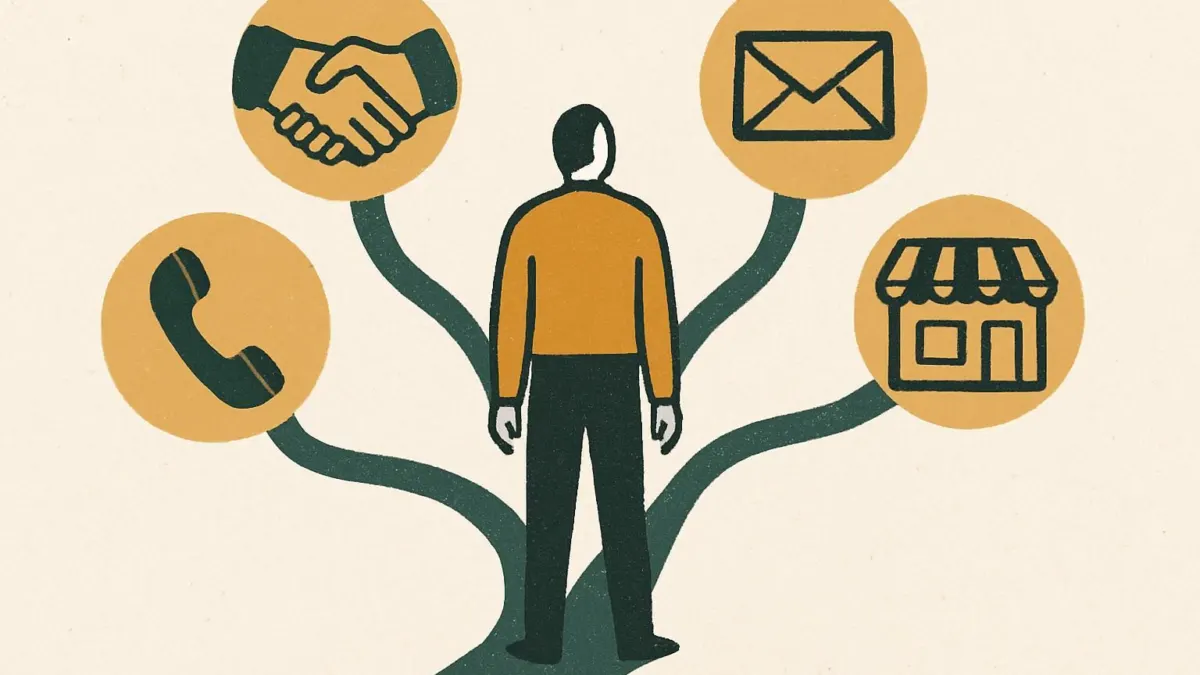
- List all digital and physical touchpoints (website, app, store, call center, email, social media).
- Interview customers or use surveys to surface pain points.
- Look for emotion shifts: confusion, delight, frustration.
Try this: Pick one customer segment and map their journey in a workshop with your team. Use sticky notes for each step and emotion. This makes the process concrete and actionable.
| Stage | Touchpoint Example | Common Pain Point |
|---|---|---|
| Awareness | Online ad | Unclear messaging |
| Consideration | Website FAQ | Can’t find answers |
| Purchase | Checkout page | Complicated process |
| Onboarding | Welcome email | Information overload |
| Support | Live chat | Long wait times |
| Loyalty | Loyalty program app | No clear value |
If you want to see how mapping aligns with innovation, explore our innovation budget planning guide.
How do you measure customer experience and choose the right CX metrics?
You measure cx strategy success through metrics like Net Promoter Score (NPS), Customer Effort Score (CES), and retention rates. Pick metrics that match your business goals and customer journey stages (CallMiner).
NPS asks how likely customers are to recommend you. CES measures how easy you make their experience. Other key metrics include Customer Satisfaction (CSAT), churn rate, resolution time, and repeat purchase rate.
- NPS: Best for tracking loyalty and predicting growth.
- CES: Reveals friction points in processes.
- CSAT: Shows satisfaction after specific interactions.
- Retention/Churn: Tells you if you’re keeping customers.
Set a baseline, then review metrics every month. Share results with all teams, not just customer support.
“What gets measured gets managed. If you want to improve CX, make your metrics visible, frequent, and tied to real action.”
For practical tips on feedback, see our article on how to give feedback to employees.
What are the best customer experience strategy examples?
Strong customer experience strategy examples come from companies that personalize service, solve problems fast, and empower employees to act. Here are three real-world models:
- Apple: Maps every in-store touchpoint (greeting, product demo, checkout) and trains staff to focus on delight, not just sales (Walker).
- Zappos: Gives agents freedom to go the extra mile, measured by customer happiness, not call times (IBM).
- Amazon: Uses data to predict needs, streamline ordering, and resolve issues quickly, making repeat purchases nearly effortless (MIT Sloan).
All three keep improving their CX strategy by obsessing over feedback and making every touchpoint count. To see more company models, check our guide to company culture examples.
How do you use voice of customer (VoC) and service blueprinting?
Using voice of customer tools means gathering direct feedback through surveys, social listening, and support data, then acting on it (Zendesk). Service blueprinting maps the processes behind each customer-facing moment to reveal gaps and fixes (IBM).
Try these steps for VoC:
- Send post-interaction surveys (ask about effort and satisfaction).
- Monitor social and review sites for spontaneous feedback.
- Set up regular customer interviews for in-depth stories.
For service blueprinting:
- Pick a key journey (like onboarding or returns).
- List each customer step, the people involved, and the backstage processes.
- Spot where handoffs break or info is missing.
Blueprints help you fix root causes, not just symptoms. For more, see our breakdown of competitive analysis in CX.
What is a 90-day customer experience strategy action plan?
A 90-day customer experience strategy plan gives you a fast, structured way to show progress, get buy-in, and learn what works. Here’s a sample plan you can adapt:
| Week | Action | Goal |
|---|---|---|
| 1-2 | Map top customer journeys and key touchpoints | Identify pain points |
| 3-4 | Collect VoC feedback (surveys, interviews, reviews) | Surface themes and quick wins |
| 5-6 | Set 2-3 CX metrics (NPS, CES, retention) | Baseline and targets |
| 7-8 | Blueprint one problem area and fix a process | Reduce friction |
| 9-12 | Train front-line staff and communicate wins | Embed CX in daily work |
Keep the plan visible, check progress every week, and celebrate early wins. For a similar approach to change, see our guide to overcoming procrastination at work.
What are common customer experience strategy pitfalls and how do you avoid them?
The biggest CX mistakes are thinking it’s just a project, focusing only on metrics, or ignoring employee feedback. Here’s how to avoid them (CallMiner):
- Don’t treat CX as a one-off initiative, make it part of your culture and strategy.
- Balance metrics with real customer stories and frontline input.
- Avoid overpromising: act on feedback, but don’t promise what you can’t deliver.
- Train and empower employees, so CX isn’t just a management goal.
Patience is shrinking and expectations are rising: a single bad experience can lose you a customer for good (Zendesk).
How do you sustain and scale a customer experience strategy?
To keep your customer experience strategy working, review and adapt it quarterly. As you grow, use tech for consistency, keep listening to customers, and make CX a leadership priority (IBM).
Steps to sustain and scale:
- Review CX metrics and VoC data every quarter.
- Update your journey maps and blueprints as products and channels change.
- Invest in tech that helps automate and personalize touchpoints.
- Share stories of great CX across teams to reinforce behaviors.
- Involve leadership, CX must be owned by the top, not just frontline staff.
As you scale, revisit your CX goals and frameworks, what worked for 100 customers may not work for 10,000. For a strategic planning approach, see our step-by-step guide to strategic planning.
Taking your customer experience strategy from idea to impact
A well-built customer experience strategy is more than a document, it’s a living system that shapes every interaction. Start by mapping your journey, listening to customers, and fixing what matters most. Use the 90-day plan to get quick wins and prove value. Then, keep adapting. When you get CX right, you don’t just win loyalty, you turn customers into your best growth engine.
Frequently asked questions
What is an example of a customer experience strategy?
An example is Zappos’ approach, which empowers agents to solve customer problems creatively and rewards them for customer happiness, not speed. This strategy focuses on making every touchpoint feel personal and effortless, leading to high loyalty and strong word-of-mouth. Other companies use similar models tailored to their brand and audience.
How do you create a customer experience strategy framework?
Start by mapping the customer journey, identify every touchpoint, and collect voice of customer feedback at each stage. Define clear CX goals and metrics, then align your teams and processes to support them. Regularly review and refine your framework as customer needs and business objectives change.
What are the main metrics for measuring customer experience?
Key metrics include Net Promoter Score (NPS), which measures loyalty, Customer Effort Score (CES), which tracks how easy it is for customers to interact with you, and Customer Satisfaction Score (CSAT). Retention rates and resolution times are also important for monitoring CX improvements.
Why do customer experience strategies fail?
They fail when treated as one-off projects, when companies focus only on metrics and ignore employee or customer feedback, or when leadership isn’t committed. Sustainable CX needs ongoing attention, cross-team buy-in, and real action on insights, not just promises.
How often should you update your customer experience strategy?
You should review and update your customer experience strategy at least every quarter. This ensures you catch changes in customer behavior, market shifts, and internal process updates. Frequent reviews keep your CX approach relevant, effective, and tied to business goals as you grow.