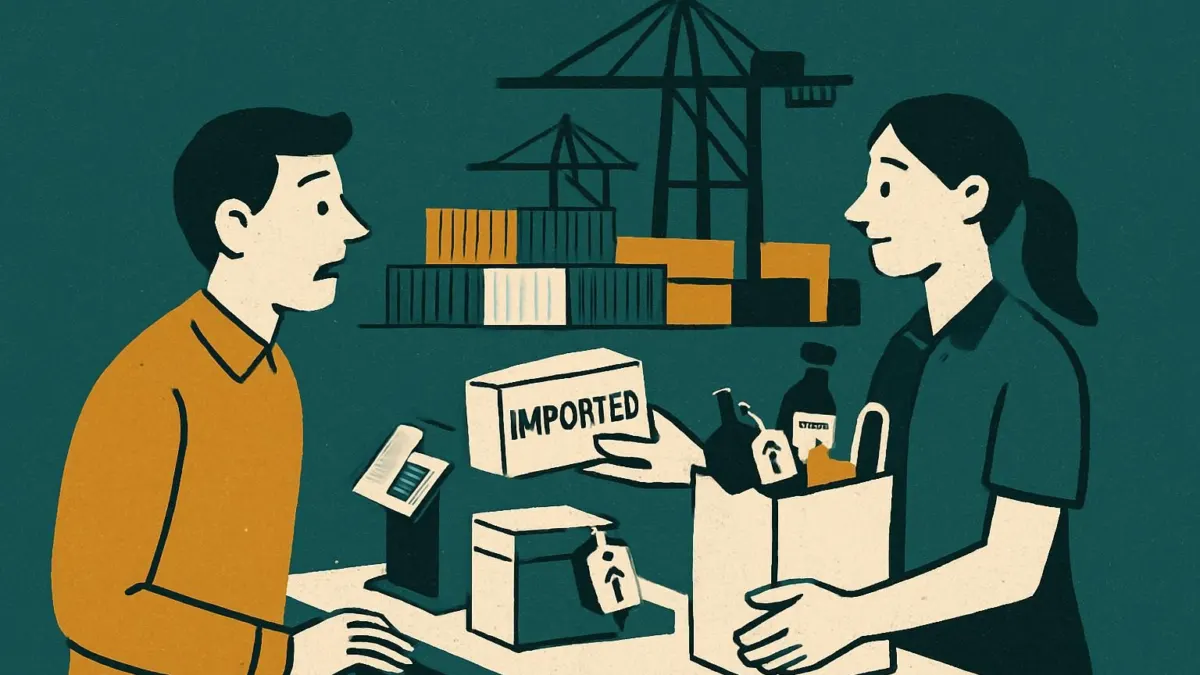
Picture this: you check out at your local store and notice your go-to brand of coffee just got pricier. You shrug, but the same thing happens with sneakers, electronics, even your favorite imported cheese. If you’ve wondered why everyday items suddenly seem to cost more, you’re not alone. The answer often ties back to tariffs impact on consumers and the numbers behind that impact might surprise you. In this article, you’ll see who pays tariffs, how much prices really rise, and what it means for your wallet and the wider economy.
Key takeaways
- Tariffs often push up consumer prices, with recent US tariffs raising costs by up to 3.1 percent for some goods [Federal Reserve].
- Much of the tariff cost is passed directly to consumers, not absorbed by producers or foreign exporters [Harvard].
- The average US household paid an estimated $1,000 more annually due to tariffs in 2025 [Tax Foundation].
- Tariffs can increase inflation and disrupt supply chains, with wider economic effects [Yale Budget Lab].
How do tariffs impact consumers in real life?
Tariffs increase the price of imported goods, and most of that cost is passed on to consumers through higher prices at the store. Studies show that recent US tariffs raised core goods prices by up to 3.1 percent, costing the average household about $1,000 more per year [Tax Foundation] [Federal Reserve].
A tariff is an import tax. Governments use it to make imported goods more expensive than domestic ones. In practice, this cost usually lands on you, the consumer, when you buy anything with imported parts or ingredients. For example, in 2025, US tariffs raised the average duty rate from 2.4 percent to a historic 9.6 percent, directly increasing prices on thousands of everyday items [Brookings].
Evidence from Harvard and Federal Reserve researchers shows the majority of these costs are not absorbed by foreign exporters, but instead get passed through to retail shelves [Harvard]. That means you pay more at checkout, not just for finished imports but for goods made in the US with foreign components.
| Tariff effect | Impact on consumer | Example item |
|---|---|---|
| Direct import tax | Higher retail price | Sneakers, electronics |
| Increased input cost | More expensive finished goods | Cars, appliances |
| Supply chain disruption | Stockouts, further price hikes | Groceries, clothing |
How do tariffs affect prices and inflation?
Tariffs almost always raise prices for consumers. Research from the Federal Reserve found that each 10 percent increase in tariffs typically boosts producer prices by about 1 percent, and the effect on consumer prices can be seen within months [Federal Reserve].
This effect is called “price pass-through”, when companies facing higher import costs raise prices for shoppers. In 2025, imported goods and durable goods prices rose by 1.5 percent through January, with core goods prices up 3.1 percent by February 2026 [Federal Reserve]. That uptick has fueled overall inflation, especially in categories like clothing, electronics, and household appliances.
Tariffs rarely stop at direct costs. They ripple through supply chains and can cause shortages, delays, or even prompt manufacturers to switch suppliers, sometimes at a higher cost. All these factors add more pressure on prices [Yale Budget Lab].
| Tariff increase | Estimated consumer price rise | Inflation impact |
|---|---|---|
| 10% on imports | 1% on producer prices | Up to 3.1% in core goods |
| Average tariff up to 9.6% | $1,000/year per household | Noticeable inflation boost |
Who pays tariffs: consumers, businesses, or foreign exporters?
The short answer: US consumers and businesses bear most of the cost, not foreign exporters. Tariffs are collected at the border from importers, who then pass along the cost throughout the supply chain, ending with consumers [Harvard].
This challenges the common belief that foreign producers “pay” tariffs. In reality, research from Harvard and the Tax Foundation shows domestic buyers, both businesses using imported parts and households buying finished products, carry the burden. The higher prices can also reduce demand, but most of the time, the cost sticks with consumers.
“When tariffs hike up costs, you don’t see a line item at checkout, but you do feel it in your total bill. Most of the time, households pay more, not overseas companies.”
Why do companies pass tariff costs to consumers?
Companies raise prices after tariffs because they operate on thin margins and need to cover higher input costs. This process is called “price pass-through.” The more essential or unique the import, the less likely companies can absorb the tariff themselves.
For example, if a US electronics company relies on Chinese semiconductors hit by tariffs, they’ll pass those costs to you. In some cases, businesses try to absorb small increases, but large or long-lasting tariffs almost always show up in the price tag.
- Necessity goods with few substitutes see higher pass-through.
- Brands with strong market power may raise prices more aggressively.
- Fierce competition can slow down price hikes, but only temporarily.
According to the Yale Budget Lab, broad-based tariffs increase uncertainty, disrupt supply chains, and give businesses fewer alternatives but to charge more [Yale Budget Lab].
How tariffs ripple through supply chains and the economy
Tariffs don’t just touch importers. They ripple across entire supply chains. Disrupted supply chains mean higher costs, delays, or even shortages, which can lead to even steeper consumer price increases.
Take the auto industry: tariffs on imported steel and parts led carmakers to pay more, which raised prices on both US-made and imported cars. Over time, companies may reconfigure supply chains to avoid tariffs, but that process is expensive and slow. The St. Louis Fed confirms that these disruptions can fuel broader inflation and dampen economic growth [St. Louis Fed].
- Supply chain changes can cause temporary shortages.
- Long-term disruption makes some products less available or more expensive.
- Smaller businesses are often hit hardest, with fewer resources to adapt.
What does retaliation mean for consumer prices?
When a country imposes tariffs, its trade partners often retaliate with their own tariffs on exports. This “trade war” dynamic amplifies the impact, raising costs not just for imports, but for US-made goods sold abroad. The result can be reduced sales, job losses, and higher prices at home.
The Yale Budget Lab found that broad retaliatory tariffs after 2018 led to measurable increases in consumer prices and hurt industries from agriculture to manufacturing [Yale Budget Lab]. Even if you don’t buy imported goods, retaliation can drive up costs on local goods and services.
“Trade retaliation is like a tax boomerang, it hits consumers in unexpected ways, from lost jobs to pricier groceries.”
How much do tariffs really cost the average household?
In 2025, US households paid an estimated $1,000 more annually due to tariffs, according to the Tax Foundation [Tax Foundation]. This number includes both direct and indirect effects, the extra cost you pay at checkout and the knock-on costs from disrupted supply chains and inflation.
But the impact isn’t spread evenly. Families who buy more imported goods, or products made with imported materials, pay more. Lower-income households, who spend a larger share of their income on essentials, often feel the squeeze the most.
- Average annual cost per household: $1,000
- Greatest impact: imported electronics, apparel, groceries
- Disproportionate effect on lower-income families
What can you do as a consumer or business?
You can’t control trade policy, but you can adapt your spending and sourcing:
- Compare prices on domestic and imported goods. Sometimes tariffs make local options more competitive.
- Watch for substitution: brands may switch suppliers, leading to price or quality changes.
- Businesses should review supply chains for tariff exposure and consider hedging or alternative sourcing.
- Stay informed. Tariff policy can change quickly and affect your bottom line.
For business readers, tools for competitive analysis and strategic planning can help you spot tariff risks early. Individuals facing higher costs may benefit from the same mindset: track spending, compare alternatives, and don’t assume price hikes are random.
What to watch for as trade policies evolve
Tariffs are powerful tools, but they come with real costs for consumers. Whether you’re running a business or managing a household budget, understanding tariffs impact on consumers helps you plan for price changes and make smarter choices. As global trade policy shifts, keep an eye on official sources and stay flexible in your purchasing or sourcing decisions.
If you want to learn more about adapting to economic uncertainty or analyzing your competitive position, see our guides on decision making under uncertainty and expanding your business internationally. Being proactive is your best defense against the hidden costs of tariffs.
Frequently asked questions
How are tariffs affecting US consumers?
Tariffs are raising prices on many consumer goods, from electronics to clothing. Most of the cost is passed straight to shoppers, adding up to about $1,000 per US household in 2025. Even products made domestically but using imported parts have become more expensive due to tariffs.
What is the effect of a tariff on consumers?
Consumers experience higher prices on imported goods and on domestic products made with foreign components. Tariffs can also trigger inflation and cause shortages or delays, as businesses adjust supply chains or pass on increased costs through price hikes.
Who really benefits from the tariffs?
Governments collect tariff revenue, and some domestic producers may benefit from reduced competition. However, most economists agree that the overall cost to consumers and businesses outweighs these benefits, especially when trade partners retaliate.
Has Trump’s tariffs helped the US economy?
Research suggests that while some US industries saw short-term benefits, broad tariffs have increased consumer prices, disrupted supply chains, and hurt economic growth. The overall impact on the economy has been mostly negative for consumers and many businesses.
Do tariffs cause inflation?
Yes, tariffs contribute to inflation by raising the cost of imported goods, which then increases prices for consumers and businesses. This effect can be amplified when tariffs disrupt supply chains or provoke retaliatory measures from trade partners.