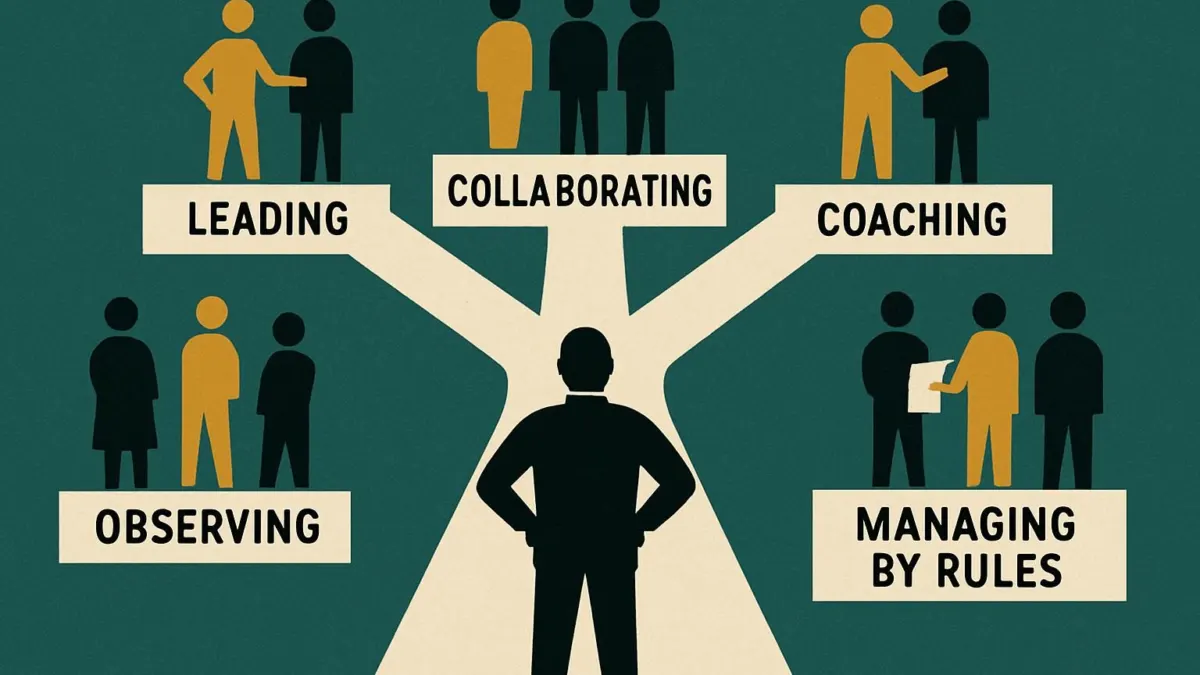
You walk into your Monday meeting and sense the team’s energy. Are you inspiring confidence, or are people holding back their best ideas? The way you lead shapes everything, from performance to engagement, even innovation. But what if your natural approach holds your team back? In this guide, you’ll discover the most effective leadership styles in management, with real CEO examples and honest stories of when each style works and when it fails. You’ll leave with practical tools to help you identify, adapt and improve your leadership style.
Key takeaways
- There are nine main leadership styles in management, each with unique strengths and pitfalls.
- Real-world CEO examples show how leadership styles work in practice and when they backfire.
- No style is perfect; the best leaders adapt their style to fit the team, context and goals.
- Recognizing your own style helps you develop self-awareness and improve team results.
What are the main leadership styles in management?
The main leadership styles in management are transformational, transactional, autocratic, democratic, servant, situational, laissez-faire, coaching, and bureaucratic. Each style describes a leader’s approach to decision-making, motivation and team direction. Understanding these styles helps managers align their strengths with team needs for better results (source).
Leadership style is the consistent way a manager directs, motivates and supports their team. Knowing the types of leadership styles helps you spot your own default and choose the right approach for each situation.
| Leadership Style | Definition | Famous Example |
|---|---|---|
| Transformational | Inspires change and growth | Satya Nadella (Microsoft) |
| Transactional | Rewards and punishes based on performance | Bill Gates (Microsoft, early years) |
| Autocratic | Leader makes decisions alone | Steve Jobs (Apple) |
| Democratic | Seeks team input in decisions | Indra Nooyi (PepsiCo) |
| Servant | Puts team needs first | Cheryl Bachelder (Popeyes) |
| Situational | Adapts style to context | Mary Barra (GM) |
| Laissez-faire | Gives team autonomy | Larry Page (Google) |
| Coaching | Develops individuals for the future | Eric Schmidt (Google) |
| Bureaucratic | Follows rules and procedures strictly | Harold Geneen (ITT) |
How does transformational leadership work in business?
Transformational leadership inspires employees to exceed expectations by focusing on vision, motivation and growth. Leaders like Satya Nadella at Microsoft use this style to drive cultural and strategic change (source).
Transformational leaders set a compelling vision, encourage innovation and push people to develop new skills. Nadella’s shift towards empathy and collaboration helped Microsoft regain its innovative edge. But this style can backfire if leaders lose sight of short-term execution, teams can get lost in big picture thinking without clear steps.
- Try this: Paint a vision that excites your team, then break it into actionable steps.
- Watch for: Signs of team burnout or confusion about priorities.
“Big visions need daily translation. Without clear goals, even the most inspired team will drift.”
When is transactional leadership effective?
Transactional leadership uses rewards and penalties to get results and works best for routine tasks or highly regulated environments. Bill Gates used this approach in Microsoft’s early years to set clear expectations and drive productivity (source).
Transactional leaders clarify rules, monitor performance and offer incentives for hitting targets. This style is ideal for sales teams or factories, where work is standardized. But over time, it can reduce creativity and motivation if people feel like cogs in a machine. Gates’ approach helped Microsoft scale but later needed to evolve to support innovation.
- Try this: Use clear incentives for repeatable tasks, but blend in coaching for complex challenges.
- Watch for: Team disengagement or risk aversion.
What are the strengths and weaknesses of autocratic leadership?
Autocratic leadership gives one person full decision-making power and is effective in crises or when quick action is essential. Steve Jobs at Apple is a classic example, known for his uncompromising standards (source).
With autocratic leadership, the leader makes all key decisions and expects compliance. Jobs drove Apple’s turnaround by insisting on product excellence and speed. But this style can alienate talented employees, stifle feedback and create high turnover if overused. When Jobs was too controlling, Apple lost key talent and morale suffered.
| When Autocratic Style Backfires | Impact |
|---|---|
| Ignoring team input | Missed opportunities, low morale |
| Over-controlling | High turnover, slow innovation |
| Poor crisis communication | Confusion, resistance |
- Try this: Use autocratic style during urgent pivots, but invite feedback when time allows.
- Watch for: Signs of resentment or slipping creativity.
How does democratic leadership improve team performance?
Democratic leadership involves team members in decisions, leading to better engagement and higher-quality outcomes. Indra Nooyi at PepsiCo used this style to foster innovation and trust (source).
Democratic leaders ask for input, listen actively and build consensus. This creates buy-in and often leads to smarter solutions. Nooyi’s open forums encouraged employees to share ideas, driving successful product launches. But decision-making can slow down, and indecisiveness may frustrate teams in fast-moving markets.
- Try this: Hold regular feedback sessions and let the team propose solutions.
- Watch for: Meetings that drag on or lack of clarity about who decides.
What is servant leadership and when does it work best?
Servant leadership puts the team’s needs before the leader’s own ambitions and is effective for building trust and loyalty. Cheryl Bachelder led Popeyes to success by focusing on franchisees’ growth and well-being (source).
Servant leaders listen deeply, remove barriers and empower others. Bachelder’s approach increased franchisee profits and brand reputation. However, servant leadership can falter when tough decisions are needed quickly, or when leaders avoid conflict to keep everyone happy.
- Try this: Ask what your team needs to succeed, then act on it.
- Watch for: Difficulty setting boundaries or making unpopular calls.
“Service doesn’t mean saying yes to everything. Sometimes, it means protecting the team by making hard choices.”
How does situational leadership adapt to changing needs?
Situational leadership is the ability to flex between styles based on team maturity, urgency and task complexity. Mary Barra at GM embodies this by shifting from hands-on oversight during crises to empowerment in stable times (source).
Situational leaders assess the situation and adapt their approach, coaching new hires, directing during emergencies or delegating to experts. This flexibility helps teams thrive across changing conditions. But if a leader is inconsistent or unclear, the team may feel confused or unsupported.
- Try this: Match your style to each team member’s experience and the project’s needs.
- Watch for: Inconsistent expectations or team uncertainty about your role.
When does laissez-faire leadership succeed or fail?
Laissez-faire leadership gives teams autonomy, which works well with skilled, motivated professionals but can fail when structure is needed. Larry Page at Google used this style to encourage experimentation and self-direction (source).
Laissez-faire leaders set goals, then step back and let the team decide how to get there. This sparks innovation in R&D or creative roles, but without guidance, teams may drift or duplicate efforts. At Google, this approach built the famous ‘20% time’ but also required strong hiring to avoid chaos.
- Try this: Give experts freedom on how to deliver, but set clear deadlines and accountability.
- Watch for: Missed targets or unclear project ownership.
How do coaching and bureaucratic leadership styles compare?
Coaching leadership focuses on developing individual growth, while bureaucratic leadership enforces rules and consistency. Eric Schmidt (Google) coached future leaders, while Harold Geneen (ITT) built a process-driven company (source).
Coaching leaders ask questions, offer feedback and help people build skills. This approach boosts retention and engagement but can be slow for short-term results. Bureaucratic leaders ensure compliance and reduce risk but may stifle creativity and slow change. Both styles have a place, coaching for learning, bureaucracy for stability.
- Try this: Blend coaching with clear rules in regulated industries to balance innovation and compliance.
How can you identify and improve your leadership style?
You can identify your leadership style in management by reflecting on your decision-making, feedback from your team and performance outcomes. The best leaders regularly adapt their style to fit new situations. Start by asking for honest team feedback, reviewing past successes and failures, and experimenting with new approaches (source).
- Ask your team how they experience your leadership.
- Take a leadership styles assessment quiz.
- Pair up with a mentor who has a different style.
- Set one experiment each month, try a new approach and track results.
The most effective leaders flex their approach to meet the moment.
What’s your next step as a leader?
Every manager has a default style, but the best leaders are learners. Use these leadership styles in management as tools, not labels. Notice what your team needs right now, and don’t be afraid to adjust. For more practical guides, explore our leadership category or browse Topics A to Z for actionable insights. Your leadership journey is ongoing, make curiosity and self-awareness your signature style.
Frequently asked questions
What are the 7 types of leadership styles?
The seven main types of leadership styles are autocratic, democratic, transformational, transactional, servant, laissez-faire and bureaucratic. Each style shapes how leaders make decisions, motivate teams and achieve goals. Understanding these styles helps managers select the right approach for their team’s needs and context.
What are the four types of leadership styles in management?
The four core leadership styles in management are autocratic, democratic, laissez-faire and transformational. Each has unique strengths and weaknesses. Autocratic leaders make decisions alone, democratic leaders involve teams, laissez-faire leaders provide autonomy, and transformational leaders inspire change and innovation.
What is the best leadership style in business?
There’s no single best leadership style in business. The most effective leaders adapt their approach based on team maturity, goals and challenges. Blending transformational, democratic or coaching elements often delivers strong results, but context and company culture always matter most.
Can leadership styles change over time?
Yes, leadership styles can and should change over time. As managers gain experience and face new challenges, their style often evolves. Regular feedback, reflection and learning from others help leaders develop more flexible, adaptive approaches that fit the needs of their teams and organizations.
How do I find out my own leadership style?
To discover your leadership style, ask colleagues for feedback, take a leadership assessment, and reflect on how you approach decisions and team motivation. Notice which situations bring out your strengths or weaknesses, and experiment with new approaches to see what works best for your team.