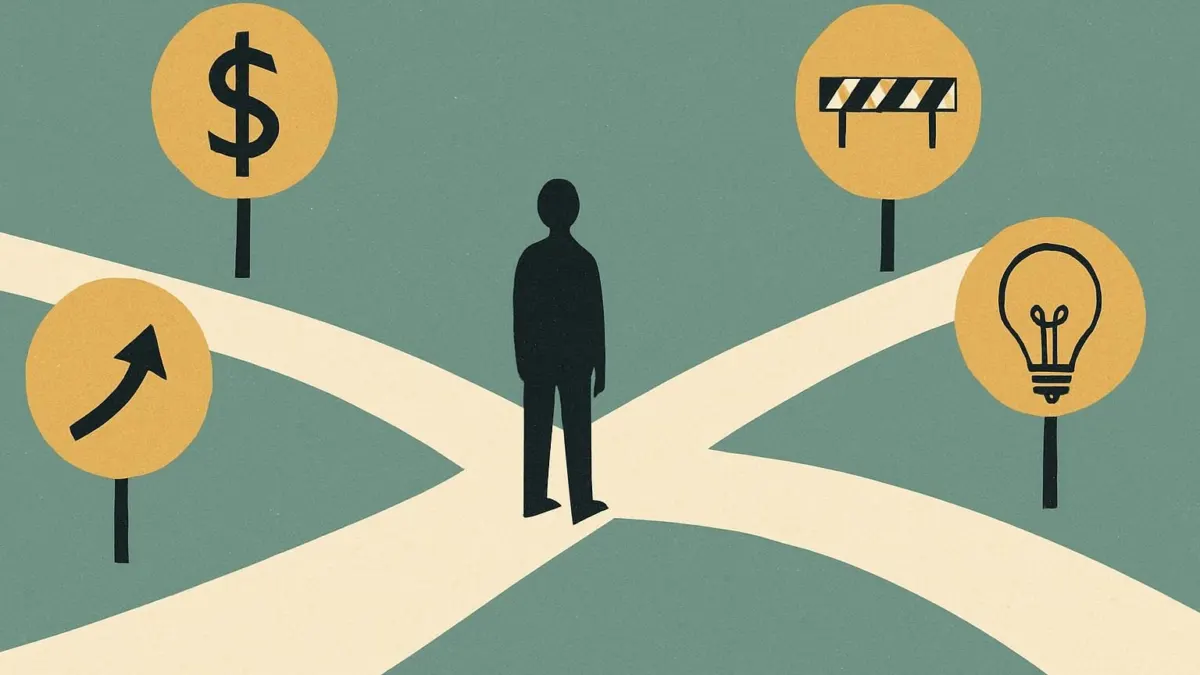
You set your annual plan in January, but by March, tariffs shift, interest rates jump, and every forecast looks shaky. The playbook you trusted no longer fits the field. If you’ve ever felt blindsided by uncertainty, you’re not alone. This guide shows how scenario planning can help you prepare for shocks like tariffs and rate swings in 2026, with practical steps, real examples, and tools you can apply today.
Key takeaways
- Scenario planning prepares you for multiple plausible futures, not just one forecast.
- Using frameworks like 2×2 scenarios helps clarify critical uncertainties and strategic options.
- Real examples, like Shell, show scenario analysis in action for complex issues such as tariffs or interest rates.
- Signposts and contingency plans make your strategy flexible and responsive in uncertain times.
What is scenario planning and why does it matter?
Scenario planning is a strategic method that helps organizations prepare for several plausible futures by analyzing uncertainties and mapping possible outcomes. Unlike traditional forecasting, it equips leaders to make informed decisions when the future is unpredictable.
Scenario planning is the process of identifying key drivers of change, such as tariffs or interest rates, and building stories, scenarios, around how these might play out. This method, first popularized by Shell in the 1970s, is now a core discipline for leaders facing rapid change (source). By preparing for a range of outcomes, you avoid the trap of planning for only one future and improve your resilience when the unexpected happens.
How does the scenario planning process work?
The scenario planning process involves structured steps to identify uncertainties, develop scenarios, and create actionable strategies. This approach helps organizations make better decisions under uncertainty (source).
The five key steps are:
- Define the focus question. What is at stake? For 2026, this could be: “How could changes in tariffs and interest rates affect our business?”
- Identify drivers of change. These are the forces that will shape your future, such as regulatory changes, technology, or market dynamics.
- Determine critical uncertainties. Which drivers are most uncertain and have the biggest impact? Tariff policy and central bank decisions are classic examples.
- Develop scenarios. Use frameworks like the 2×2 matrix to build four distinct, plausible futures based on combinations of uncertainties.
- Create signposts and contingency plans. Define early warning signals and concrete actions for each scenario.
| Step | Purpose | Example for 2026 |
|---|---|---|
| Define focus question | Clarifies the problem | “How will tariff and interest rate shifts impact us?” |
| Identify drivers | Lists influences | Tariffs, rates, tech, supply chain |
| Critical uncertainties | Prioritizes unknowns | Tariff policy, rate direction |
| Develop scenarios | Maps four futures | High/low tariffs x rising/falling rates |
| Signposts & plans | Prepares response | Monitor policy news, adjust sourcing |
Each step is designed to challenge your assumptions and broaden your strategic thinking. For practical tools, see our step-by-step guide to strategic planning.
What is a scenario planning example for tariffs and interest rates?
A scenario planning example illustrates how to build and use scenarios to address real-world uncertainties, such as shifts in tariffs and interest rates in 2026.
Imagine a manufacturer that relies on imported components. Their finance team identifies two critical uncertainties: whether tariffs will rise or fall, and whether interest rates will increase or decrease. Using a 2×2 scenario matrix, they map out four plausible futures:
| Scenario | Tariffs | Interest Rates | Main Risk | Potential Response |
|---|---|---|---|---|
| Cost Squeeze | High | High | Margins erode | Negotiate with suppliers, automate |
| Cheap Credit, Pricey Imports | High | Low | Costly inputs, cheap loans | Finance inventory, seek new markets |
| Relief Rally | Low | Low | Growth opportunity | Accelerate expansion, invest |
| Debt Trap | Low | High | Expensive borrowing | Cut debt, focus on cash flow |
For each scenario, they define signposts (like government policy announcements) and set contingency plans. This process does not predict the future, but it prepares the company to act quickly, whichever way the winds shift. For more on making decisions when data is scarce, see Decision Making Under Uncertainty.
What frameworks and tools help scenario analysis?
Scenario analysis uses structured frameworks to clarify options and risks. The 2×2 scenario matrix is the most popular tool for mapping uncertainties and visualizing four distinct futures (source).
Key frameworks include:
- 2×2 scenario matrix: Plots two critical uncertainties on axes to generate four scenarios.
- Shell method: Builds rich narratives for each scenario and explores their strategic implications (source).
- Signpost tracking: Identifies leading indicators that signal which scenario may unfold.
- Contingency planning checklist: Aligns specific actions to each scenario.
“Scenario planning is not about predicting the future, but about making better decisions in the face of uncertainty.”
Modern tools now integrate data from multiple sources to support scenario building and analysis (source). For teams new to this, start with a simple 2×2 and expand as you build confidence.
How do you identify drivers of change and critical uncertainties?
Drivers of change are external or internal factors shaping your strategic environment. Critical uncertainties are the drivers whose future direction is both highly uncertain and highly impactful (source).
To identify them:
- List all possible drivers (e.g., tariffs, economic growth, supply chain risks, regulations, consumer trends).
- Rate each for uncertainty (how unpredictable) and impact (how much it matters).
- Select the top two to use for your scenario matrix.
For example, in 2026, the direction of US-China tariffs and global interest rates are both highly uncertain and impactful for many industries. A table can help you prioritize:
| Driver | Impact | Uncertainty | Include in Scenarios? |
|---|---|---|---|
| Tariff policy | High | High | Yes |
| Interest rates | High | High | Yes |
| Consumer demand | Medium | Low | No |
| Technology adoption | Medium | Medium | Maybe |
| Supply chain | High | Medium | Maybe |
Choosing the right uncertainties keeps your scenarios focused and actionable. For more on competitive context, see our competitive analysis guide.
How do you create and use 2×2 scenarios?
2×2 scenarios are four plausible futures built by crossing two key uncertainties in a matrix. This helps you visualize different outcomes and test strategies against each.
- Pick your two most important uncertainties (e.g., tariffs up/down, rates up/down).
- Draw a square with one uncertainty on each axis.
- Describe what happens in each quadrant (scenario).
- Give each scenario a name and a short story.
- Identify risks, opportunities, and possible responses for each.
For example, if tariffs rise and rates fall, you might expand credit-fueled investment but watch margins. If both rise, you prepare for tough cost controls. This approach lets you rehearse different futures and spot signals early. For a practical worksheet, see our strategic planning process guide.
What are signposts and contingency plans in scenario planning?
Signposts are leading indicators that help you spot which scenario is unfolding, while contingency plans are actions you prepare in advance for each possibility (source).
Examples of signposts:
- Official policy announcements on tariffs
- Central bank statements on interest rates
- Commodity price trends
- Supply chain disruptions
For each scenario, set clear triggers for action. For instance, if rates hit a certain threshold, you might refinance debt or freeze hiring. Regularly review signposts and update plans as new information comes in. This keeps your strategy agile when the environment changes fast.
How do you build strategic foresight into your planning?
Strategic foresight is the discipline of anticipating and preparing for possible futures. It combines scenario planning with ongoing monitoring and learning (source).
To build foresight habits:
- Schedule regular scenario reviews (quarterly or after major policy shifts).
- Assign owners to track specific signposts.
- Encourage open discussion of “what if” situations at leadership meetings.
- Capture lessons from past surprises to improve future planning.
By embedding foresight, your team becomes better at spotting weak signals and adjusting before a crisis hits. For more leadership tools, see leadership styles in management.
What are common mistakes and how can you avoid them?
Common pitfalls in scenario planning include focusing on too many variables, confusing scenarios with forecasts, and failing to act on insights (source).
- Limit scenarios to 3 to 4, anchored on key uncertainties.
- Keep narratives plausible, not extreme or fanciful.
- Link each scenario to real decisions and actions.
- Review and update as conditions change.
Scenario planning is most valuable when it’s practical and dynamic, not a one-time exercise. For examples of adaptability in strategy, see our discussion of workslop and strategic drift.
Taking scenario planning from theory to action
When the future is unpredictable, scenario planning gives you a way to stay prepared and confident. Start with one challenge, like tariffs and interest rates in 2026. Gather your team, sketch out a 2×2, define signposts, and set contingency plans. Make this a habit, not a one-off. The result: faster reactions, fewer surprises, and a business that thrives in uncertainty.
Ready to sharpen your strategy? Build your first scenario matrix this week. For more on planning, see our step-by-step strategic planning guide or explore related strategy articles.
Frequently asked questions
What is a scenario planning process?
The scenario planning process is a structured method for preparing organizations for multiple possible futures. It involves defining a focus question, identifying key drivers of change, determining critical uncertainties, developing distinct scenarios, and creating signposts and contingency plans for each scenario. This approach helps leaders make better decisions under uncertainty (source).
What are the 5 steps of the scenario planning process?
The five steps are: 1) Define the focus question. 2) Identify drivers of change. 3) Determine critical uncertainties. 4) Develop scenarios using a framework like a 2×2 matrix. 5) Set signposts and create contingency plans for each scenario. Each step helps clarify risks and prepare practical responses to future changes (source).
What is an example of scenario planning?
An example is a company preparing for 2026 by building four scenarios around rising/falling tariffs and interest rates. Each scenario outlines potential risks and responses, such as cost-cutting in a high-tariff, high-rate environment or expansion in a low-tariff, low-rate scenario. This helps the business react quickly to real-world shifts (source).
What are the 7 types of planning?
The seven types of planning are: strategic, tactical, operational, contingency, financial, workforce, and scenario planning. Each serves a different purpose in setting goals, allocating resources, and responding to change. Scenario planning focuses on preparing for multiple future outcomes rather than forecasting a single path (source).
How often should scenario plans be updated?
Scenario plans should be reviewed and updated at least annually, or more frequently if major events occur (such as policy changes, economic shocks, or new data). Regular updates ensure your plans reflect current realities and allow your business to respond faster to emerging risks or opportunities (source).